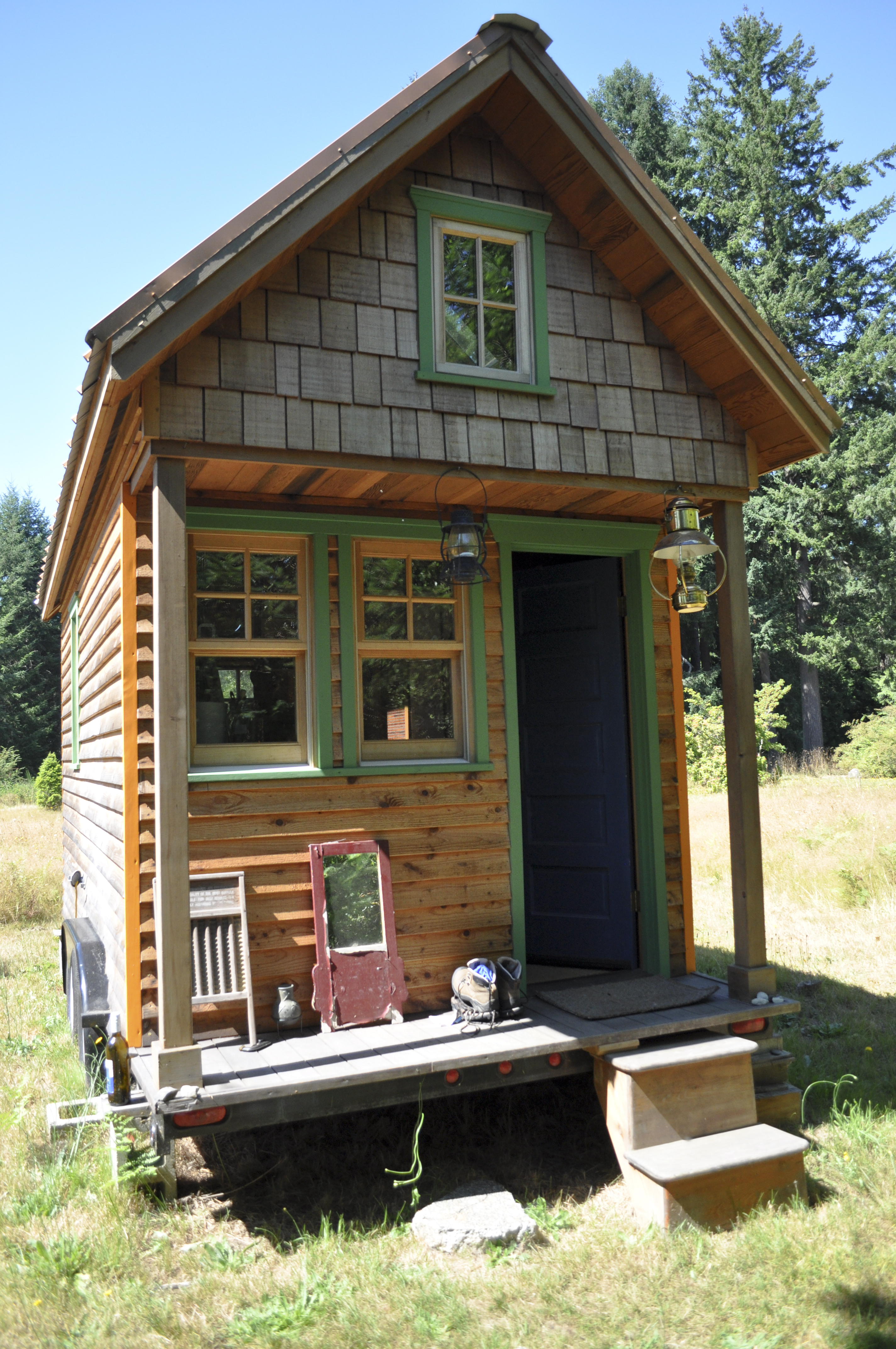
A mobile tiny house — structures on wheels occupy a regulatory grey zone in most Canadian provinces. Photo: Wikimedia Commons / CC BY 2.0
The Classification Problem
Before any discussion of permits or setbacks, the central issue for tiny home builders and buyers in Canada is classification. A dwelling built on a concrete foundation is a dwelling. A dwelling mounted on a steel trailer frame is, in most provincial motor vehicle and building codes, a recreational vehicle. These two categories carry fundamentally different regulatory consequences.
Foundation-built tiny homes generally fall under the same residential building codes as conventional houses. They require a building permit, must meet minimum energy efficiency standards, and are assessed for property tax as residential real estate. The primary challenge for these structures is minimum floor area — many municipal zoning bylaws specify a minimum square footage for a principal dwelling that a 20-square-metre home cannot meet.
Trailer-mounted tiny homes, sometimes called tiny houses on wheels (THOWs), are frequently registered as recreational vehicles under provincial highway traffic legislation. This means they cannot legally serve as a permanent primary residence in most RV parks, and they cannot be placed on a residential lot without a land use variance or specific zoning permission. Financing is also more difficult, since most mortgage products are written for real property rather than vehicle-registered structures.
British Columbia: Leading Incremental Reform
British Columbia has been among the more active provinces in updating its housing legislation to allow smaller dwellings. In 2023, the provincial government passed legislation requiring municipalities to permit secondary suites and detached accessory dwelling units (ADUs) on most single-family lots, regardless of existing municipal zoning restrictions. While this legislation targets laneway houses and garden suites rather than tiny homes specifically, it opened the door for dwelling units as small as 29 square metres in some configurations.
Several BC municipalities had already moved ahead of provincial requirements. The City of Nelson, for instance, adopted a secondary suite policy allowing structures as small as 24 square metres. Kelowna updated its zoning to permit coach houses on lots that meet minimum size thresholds, with no mandated floor area minimum for the accessory unit beyond what building codes require for habitability.
Tiny houses on wheels remain outside these frameworks in BC. The provincial government has acknowledged the classification gap but has not legislated a solution. Residents wishing to park a THOW on private property must typically apply for a development variance permit — a process that succeeds more often in rural areas where neighbours and local council are less likely to object.
Ontario: The ADU Policy Shift
Ontario's 2022 More Homes Built Faster Act (Bill 23) removed the ability of municipalities to prohibit additional dwelling units on lots with detached, semi-detached, or row housing. Municipalities were required to permit at least one additional unit within the main structure and one in an ancillary structure such as a garage or coach house. This change was specifically aimed at accelerating housing supply, though it also created new space for small accessory dwellings.
The practical effect varies by city. Toronto's zoning bylaws allow garden suites and laneway suites, with minimum unit sizes set at the provincial building code minimum — approximately 11 square metres for a bachelor, though functional living spaces typically run at least 20 to 25 square metres to meet requirements for kitchen, bathroom, and sleeping facilities. Ottawa similarly permits detached additional dwelling units in most residential zones, with each application assessed for lot coverage, setbacks, and heritage overlays where applicable.
Ontario has not addressed the THOW classification issue at the provincial level. Several rural Ontario municipalities have passed individual bylaws permitting tiny houses on wheels in designated areas, often agricultural zones or campsite areas that already accommodate seasonal dwellings.
Alberta and Prairie Provinces
Alberta's Municipal Government Act gives municipalities broad authority to set their own land use bylaws, which means the regulatory landscape for tiny homes varies considerably between Calgary, Edmonton, and smaller communities. Calgary updated its secondary suite rules in recent years and now permits suites in most low-density residential zones without a public hearing, though floor area minimums still apply.
Some rural Alberta municipalities have taken a permissive approach to THOWs, particularly in regions where agricultural workers and seasonal residents have long used non-traditional housing. In these areas, a tiny house on wheels parked on agricultural land may be tolerated without formal approval, though this creates legal uncertainty for occupants regarding insurance, utilities, and land tenure.
Saskatchewan and Manitoba follow similar patterns: urban centres maintain conventional minimum floor area requirements, while rural municipalities often have fewer restrictions in practice, if not in written policy.
What Prospective Residents Should Verify
The regulatory environment for tiny homes in Canada continues to shift, and the gap between written bylaws and on-the-ground enforcement varies widely. Anyone considering a tiny home — whether foundation-built or trailer-mounted — should verify the following before purchasing land or a structure:
- The specific land use designation of any lot under consideration, and the minimum floor area and setback requirements for that zone
- Whether the municipality permits accessory dwelling units by right, or whether a variance or rezoning application is required
- How the local building department classifies a trailer-mounted structure — as a building, a vehicle, or something else
- Whether utility connections (water, sewer, electricity) can be legally obtained for the intended structure type
- The availability of financing, since most conventional mortgage products do not apply to trailer-classified structures
The Canada Mortgage and Housing Corporation and provincial planning ministries publish guidance documents on accessory dwelling units that provide a useful baseline for understanding local policy, even when the specific topic of tiny homes is not addressed directly.
The Direction of Travel
The trajectory of Canadian housing policy in the mid-2020s has been toward allowing more dwelling types on existing residential land. Pressure to increase housing supply — particularly in cities where cost is the primary barrier for younger households — has made provincial and municipal governments more willing to permit smaller and more varied dwelling forms than was common a decade ago.
Tiny homes remain on the edge of these changes rather than at their centre. The reforms being enacted are primarily aimed at secondary suites, laneway houses, and low-rise multi-unit buildings. Whether Canada will eventually adopt a standardised regulatory framework for small dwellings — one that resolves the foundation-versus-trailer classification problem — depends on whether advocates can make the case that tiny homes address a meaningful portion of the housing need.